Podcast Money ·
Best Podcast Gear That Pays for Itself Instead of Sitting in a Box
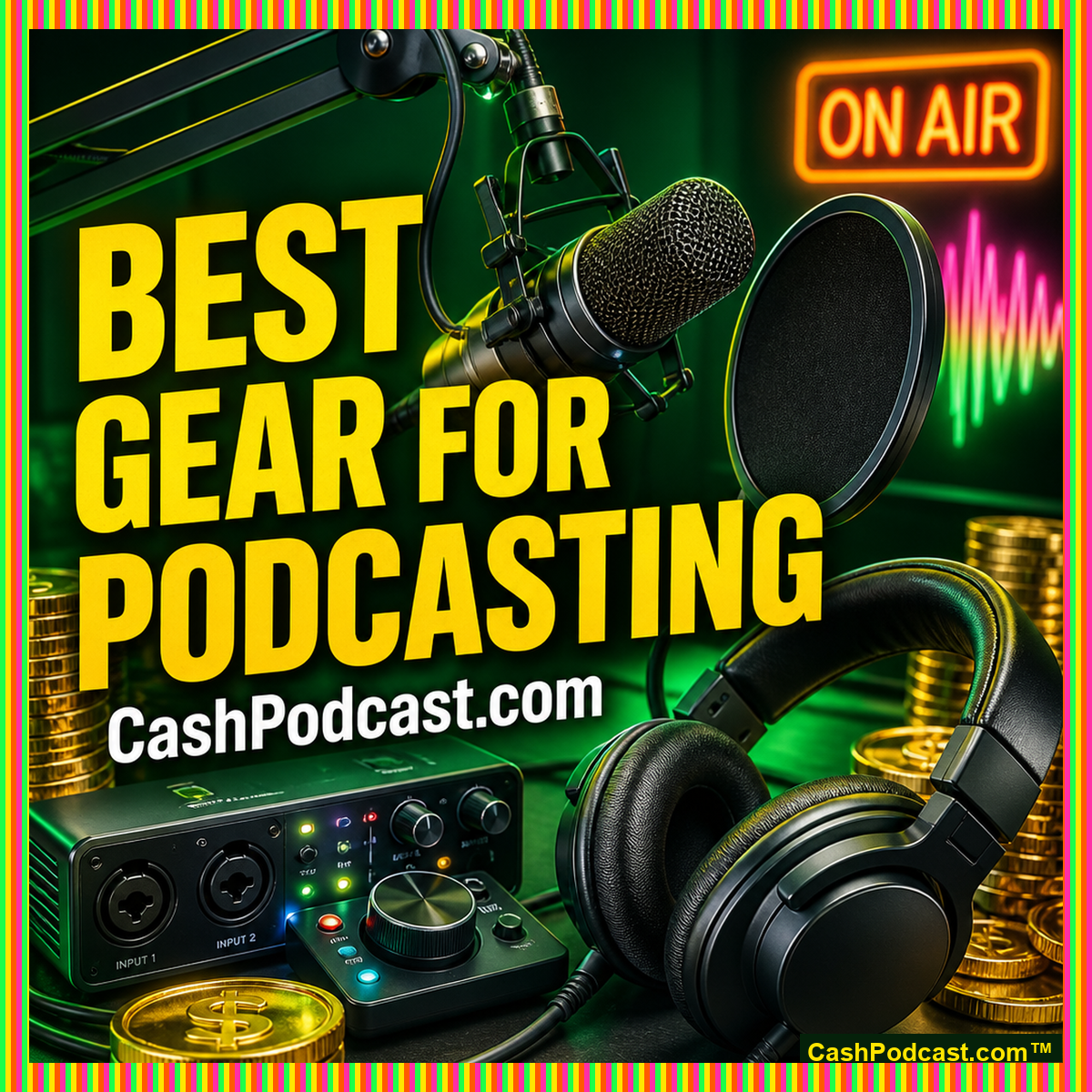
Best gear for podcasting on a cash show is the kit that makes a listener stay through the mid-roll without lighting your first deposit on fire. A treated closet and a mid-tier dynamic microphone will beat a condenser in a hard kitchen every time. Listeners forgive simple gear. They do not forgive echo. Echo is how people skip, and skips are how monetization dies quietly.
This is not a luxury roundup. We will not rank gold-plated shock mounts. We will tell you what to buy first, what to skip, and when an upgrade is actually a cash decision instead of a shopping hobby. The Cash Podcast rule is: buy for the room, then the mic, then the headphones, then nothing else until a sponsor or a guest would notice.
Affiliate links may appear on this site. A commission does not turn a weak mic into a recommendation. Use what you would record a finance episode on. Disclose. Your taxes are yours.
The room is the first purchase
Soft stuff eats reflections: a closet of coats, a moving blanket, a rug. Close the door. Turn off the fridge if you can. Tell the household the recording window. A four-hundred-dollar mic in a tiled bathroom will still sound like a tiled bathroom. A one-hundred-dollar dynamic mic in a dead closet will sound like a person.
You are not building a radio station. You are building a voice people can stand for twenty minutes. That is the job. Clips and cameras can wait until a read has cleared. Video is a second company. Do not start two companies because a thumbnail looked busy.
If you record interviews, pick a quiet hour and a stable connection. A second mic is for in-person guests. Remote guests live in their rooms. You cannot buy them a closet. You can ask them to wear headphones so you do not hear yourself twice.
A sane kit
Dynamic microphone. USB is fine on day one. XLR plus a small interface is fine if you already own it. Closed headphones so you hear plosives before the audience does. A boom arm so the mic stays off the table thumps. A pop filter if you are a plosive factory. That is the kit.
Skip the mixer with twelve empty channels. Skip the broadcast console. Skip the stream deck with forty soundboard buttons. Those objects photograph well and earn nothing. Spend leftover cash on hosting, a door sweep, and the offer you will read.
Cables matter more than brands. A cheap cable that crackles will waste an hour you could have spent publishing. Buy one spare XLR or USB cable and put it in a drawer. Label the drawer. Future you is tired.
When to upgrade
Upgrade when a guest would notice, when you record daily, or when a sponsor asks whether you can deliver broadcast-safe files. Until then, the upgrade is usually distribution: a better episode page, a clearer URL, a list of emails from people who asked to hear from you.
A second mic for in-person interviews is a real upgrade. A cloud lifter-style helper is a real upgrade if your interface is noisy. A new shock mount because a review said so is not. Ask whether the current file is costing you completions. If completions are fine, the kit is fine.
Do not finance gear on a credit card because a YouTuber unboxed it. Interest is a fee. Fees are the enemy of cash. The gear article on this hub exists so you can stop shopping and start shipping.
How gear ties to money
Better sound raises the chance a listener finishes the host-read. It does not create the offer. Pair this page with make money with a podcast and the ads guide so the kit has a job. A beautiful waveform of you rambling is still rambling.
If you sell gear as an affiliate, use the same kit you name. Do not read a condenser you returned. The audience can search. They will. Your future EPC depends on not becoming a museum of dead SKUs.
Travel kits should be smaller, not fancier. One dynamic USB mic and headphones in a pouch will save more episodes than a pelican case you are afraid to check. Fear of the case is how road episodes never happen.
A buying checklist
Room treated enough that a clap does not ring. Mic that rejects the sides. Headphones that seal. Arm that does not droop. Cable spare. Host that gives you RSS. Page for notes. Offer for the read. If any of those is missing, the next Amazon tab is probably the wrong tab.
Write the receipt in the ledger as a cost. Gear is not revenue. It is a bet that the next hundred episodes will be listenable. Bets should be small until cash exists.
Then record a one-minute test, listen on a phone speaker, and only then buy the next thing. Phone speakers are cruel and honest. If it is fine there, it is fine in a car, and cars are where podcast cash either happens or does not.
Homework
Fix the room tonight with blankets you already own. Order the mic tomorrow if you still need one. Do not order a mixer. Publish this week with whatever is quiet enough. The cookie cannot start in a shopping cart.
When a sponsor or a guest would actually notice, come back and upgrade one item. One. Then go back to the offer. Offers pay for mics. Mics do not pay for offers.
You now know enough about best gear for podcasting in the only sense we respect: a kit that can carry a cash event. The apps guide is next if the feed is the mess. The monetization map is next if the offer is the mess.
Interfaces, headphones, and the unglamorous bits
If you go XLR, a small two-channel interface is enough. You do not need lights on the front that look like a spaceship. You need clean gain and a headphone jack that does not hiss. Hiss is how people think your show is cheap even when the advice is good. Cheap sound plus good advice still loses the mid-roll.
Closed headphones let you hear the room the audience will hear. Open-back headphones leak and make you think you sound warmer than you do. Warmth is not the job. Intelligibility is the job. If a listener in a car cannot catch the URL, the affiliate read was theater.
A boom arm that sags will put the mic in the wrong place by minute twenty. Tighten it. Tape the desk so it does not thump. These are not 'pro tips from a studio.' These are how you stop throwing away completions for free. Completions are the inventory ads and affiliates both buy.
Travel, backups, and when gear is the wrong problem
A travel kit is one dynamic USB mic, headphones, and a spare cable. Record a local WAV even when you also record to the cloud. Clouds fail. Local files are how interviews survive. Label the folder with the date and the guest so you do not donate an hour to archaeology.
Backups are boring and they are cash infrastructure. A dead drive with the only copy of a sold episode is how you do makegoods for free. Copy the project to a second disk the day you upload. That is the whole policy.
If people are not buying, the mic is probably not the reason. The buyer sentence, the URL, and the ask are the usual reasons. Fix those before you upgrade. Shopping feels like progress. Progress is a cleared line in the ledger. Come back to gear when a guest or a sponsor would actually notice the file. Until then, record. A boring kit that ships every week will out-earn a beautiful kit that waits on a perfect room. Perfect rooms are a myth. Quiet-enough rooms are a schedule.
Category: Podcast Money