Podcast Money ·
Affiliate Marketing on a Podcast: Reads Listeners Will Forgive
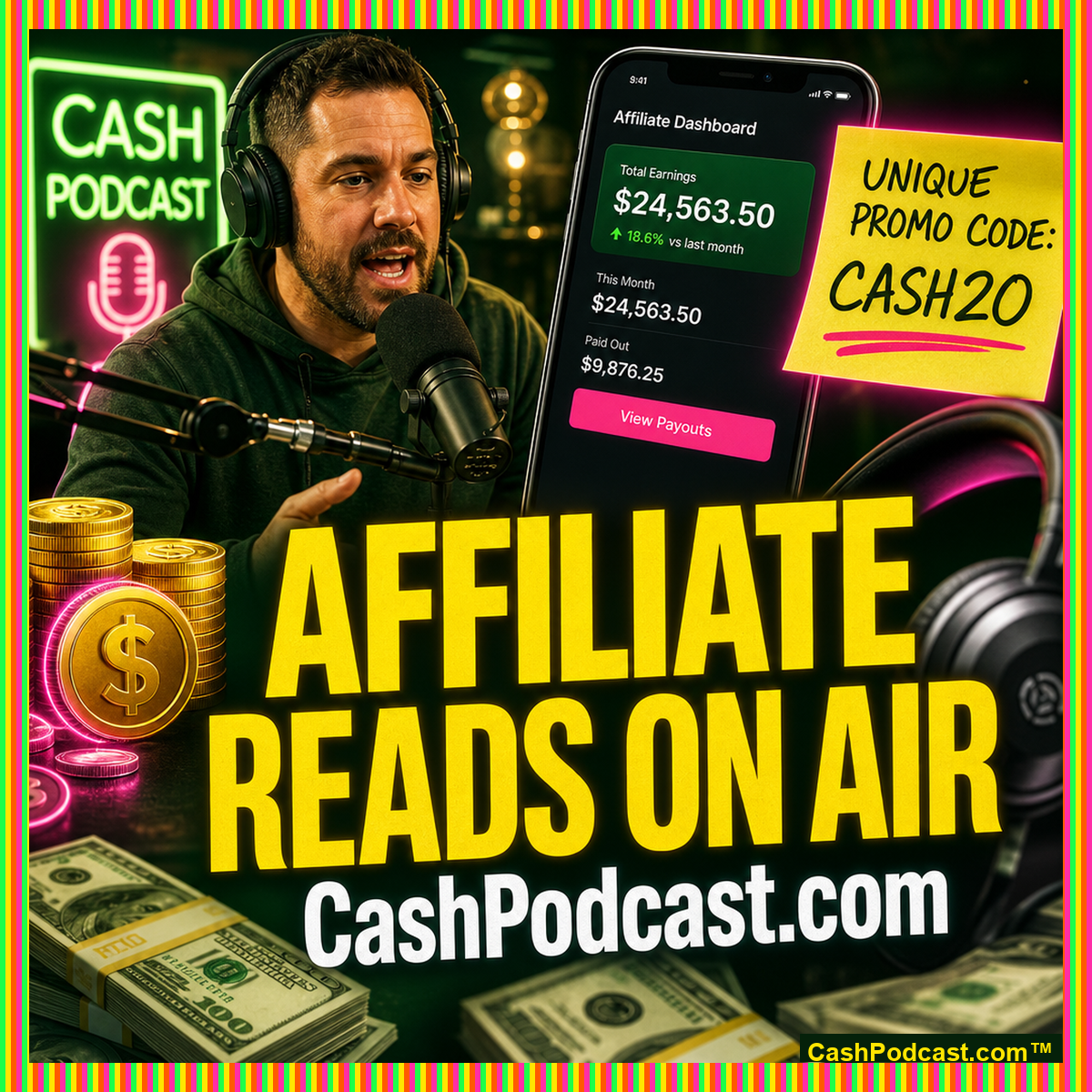
Affiliate marketing on a podcast is a spoken introduction plus a written URL. A seller wants distribution. You have ears. A cookie or a code tries to remember that introduction. After returns and the program's calendar, cash may appear. That is the whole machine. Software does not change it. A louder mid-roll does not change it. Trust changes it.
Listeners forgive ads that sound like the host. They punish ads that sound like a hostage reading a string of letters. The difference is usually whether you use the thing and whether you say who should not buy it. This guide assumes you are starting from a small catalog, not a national network. The Cash Podcast beginner rule is one offer, one code, one page.
Disclose. Put it in the audio and on the episode page. People are not stupid, and regulators are not theoretical. Trust is the only renewable asset you have if you also host a finance show.
Pick an offer that survives a dinner table
If you cannot explain the product to a friend without a script, you cannot read it well. Use the tool. Keep a note of a real moment it saved. That moment is the read. Features are for the landing page. Your job on tape is the moment.
Match the audience. Cash Podcast listeners will consider hosts, freelance tools, and small-business software. They will smell a random vitamin stack. High commissions do not fix a mismatch. They just pay you to lose trust faster.
Ask the program for a vanity URL and a unique code before you record. Audio attribution is messy. Codes are how you stop donating conversions to a retargeting pixel or to whoever they search next.
Write the read like a scene, not a banner
Thirty to forty-five seconds. One problem, one moment of use, one URL, one disclosure. Repeat the URL once. If you need seven repeats, the URL is bad or you do not trust the edit. Seven repeats also train skips. Skips are how your future CPM dies before it is born.
Place the read where a ready listener still has attention: after a useful segment, not after a dead joke. Do not stack four reads in a twenty-minute show. That is a bazaar. One primary offer per episode is plenty, plus a standing mention of your own product if it is real and live.
Assign the read to the host who has the story. If a co-host reads an offer they do not use, the audience hears the seam. Split the cash in a document, not a vibe. Partnerships die on vague splits faster than on bad downloads.
Show notes are half the commission
A clean episode page with timestamps, the disclosure, and the link is listener-friendly and search-friendly. People listen in cars. They will not tattoo a discount code on their wrist. Your site is the second microphone.
Internal link to the monetization hub or the ads hub so a Google visitor is not an island. That is how a podcast becomes a library, which is how CashPodcast.com is built. Transcripts help people command-F the offer. They are not glamorous. They are cash infrastructure.
If a listener cannot find the URL without rewinding, you donated the commission. Put the link, the code, and the disclosure on the episode page the same hour you upload. That hour is part of the job, not extra credit.
Tracking without a command center
Use the network's sub IDs or UTMs so you can see if the newsletter or the mid-roll produced the cookie. A spreadsheet is enough. When you have volume, add a link manager. Tools are not a personality.
Check the dashboard on a schedule, not as a slot machine. Daily refreshing will make you rewrite a good read into a worse one. Weekly is plenty until you are spending money on ads to the show itself, which you should not do until strangers have paid.
When the first commission pending appears, do not spend it. Pending is a mood. Cleared is cash. Celebrate with a note in the ledger, not a new chair.
Ethics that protect the next read
Do not target kids. Do not imply guaranteed income. Do not hide that you earn. Do not cloak in a way that violates the program. Do not buy fake downloads to impress a manager. Those tricks sometimes work until the day the account dies.
If the product breaks, update the page and say so on a later episode. Your future EPC depends on not becoming a museum of dead tools. Readers forgive a dated date stamp. They do not forgive a glowing review of a ghost.
Every read spends a little goodwill. Good offers refill it because the listener's life got easier. Bad offers overdraw it. If you overdraw, the next read — even a good one — converts like a stranger. Protect the balance sheet. That is the adult version of authenticity.
A 21-day on-air plan
Week one: niche sentence, program accepted, vanity URL in hand. Week two: draft the scene, disclose, record, publish notes. Week three: share with humans who can honestly need the thing, then fix the confusing sentence. Do not join twenty programs. Twenty programs is not progress. One converting URL is.
If nothing happens, you may need more distribution, a more wanted offer, or a clearer page. Change one variable. Changing all three is how people conclude that affiliates are dead after one quiet fortnight.
Then open the ads guide only if a brand with a budget has replied, or open the gear guide if people are complaining about echo. One tab. Publish.
Offers that usually fail on a finance podcast
Mystery supplements, 'secret banks,' and anything that requires a downline. Also anything you would be ashamed to defend to a listener who lost money. Shame is data. If you feel it while recording the read, stop. Find a tool you use for the show itself: hosting, a mic, a bookkeeping app, a freelance marketplace you actually hired from.
A high payout on a product with a 90-day cancel and a confused buyer is not a win. You will spend the 'win' on support email and clawbacks. Score cookie length, refund window, and whether the landing page matches what you said on tape. Mismatch is how chargebacks happen and how directories get ugly.
If a manager wants you to hide the disclosure or to claim typical income, walk. There will be another offer. There will not be another reputation. Reputation is the asset that makes a small show out-earn a large skip-trained catalog.
Show notes templates that convert
Title the buying question. Open with who the episode is for. Timestamp the read. Paste the URL twice: once in a short list at the top, once next to the disclosure. Link internally to the monetization hub. Add a last-updated date when the UI of the product changes. Rankings and trust both like a human who came back.
Take your own screenshot of the tool if you publish a blog companion. Borrowed creatives from a network pack make every page look like every other page. Original images also become the featured PNG habit on this blog: specific, watermarked, boring on purpose.
Send the episode page to three humans who can need the thing. Ask what was confusing. Confusion is a gift. Silence is either a distribution problem or an offer problem. Do not treat silence as proof that affiliates are dead. Treat it as a prompt to change one variable and ship again. Then record the next episode with the same offer if the offer is still honest. Repetition is how codes get remembered. Novelty for its own sake is how catalogs become noisy and empty. If you are bored of the offer, the listener is just now learning the URL. Boredom is not a signal to add a second code.
Category: Podcast Money
Tags: podcast affiliates beginners