Podcast Money ·
How to Run Ads on a Podcast Without Training People to Skip
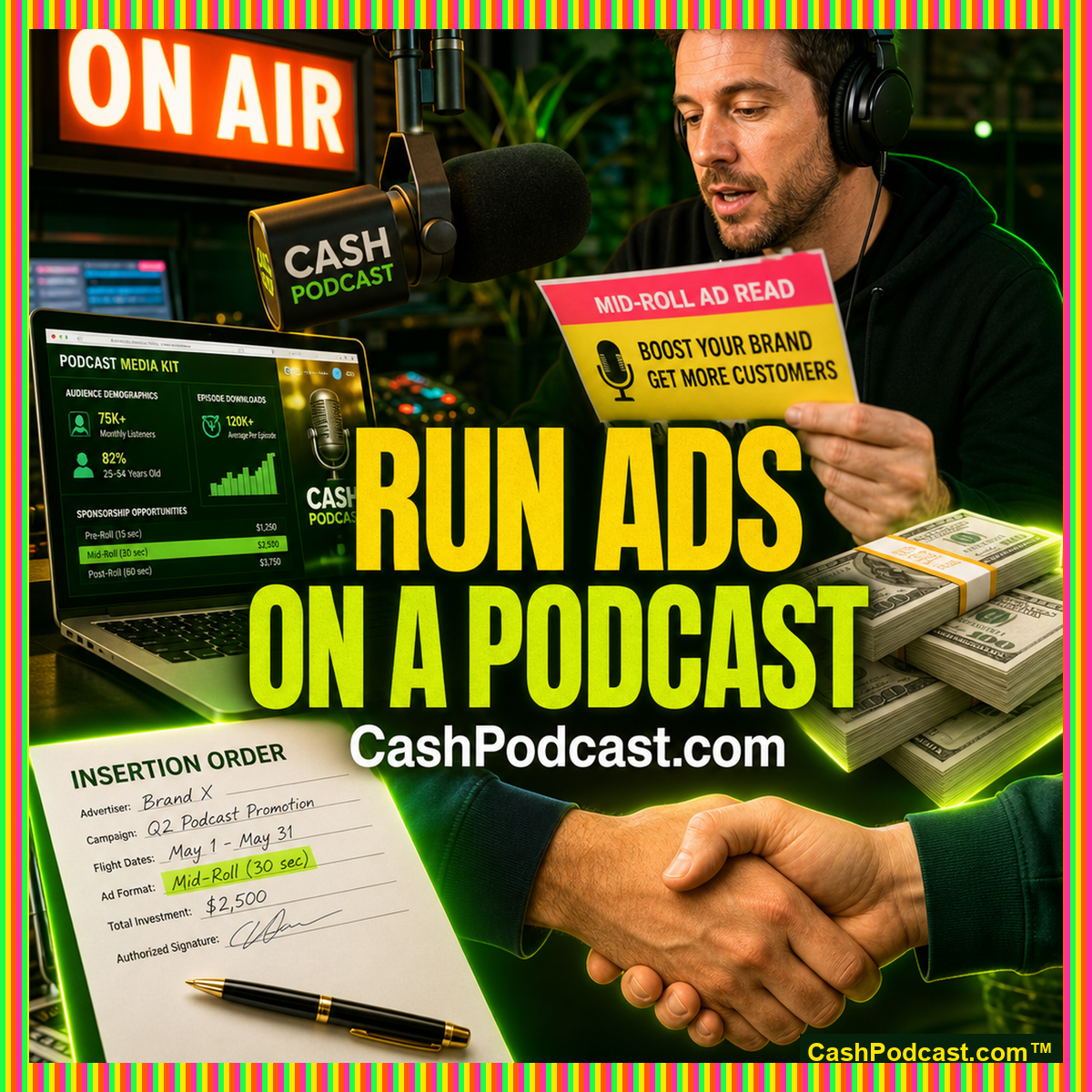
How to run ads on a podcast without training people to skip: write a host-read that sounds like you, put the URL in the notes, invoice like an adult, and never let a brand put a lie in an RSS file that will outlive the insertion order. Ads pay for attention. They are not the same as affiliates, which pay for outcomes. A durable show uses both so a late network does not starve the week.
This guide covers host-reads, networks, dynamic insertion, rate cards, and disclosures. It will not give you a fake CPM from a private jet thumbnail. Your rate is a story until someone pays it. Start with a card even if the first prices are commission-only. The card trains you to treat attention as inventory.
Disclose. The FTC-style sentence is not a vibe killer. It is how adults sell on a finance podcast. Do not let an advertiser write a claim you will have to hear in 2028.
Host-reads beat wallpaper
Thirty to forty-five seconds. One problem, one moment of use, one URL, who should skip, one disclosure. Repeat the URL once. If the brand sends a paragraph that sounds like a press release, rewrite it in your mouth or refuse the flight. A hostage read trains skips. Skips train your future buyers to leave before the cash event.
Use the product. A real moment beats a feature list. If you would not tell a friend to buy it, do not take the money. Short money from a bad read is expensive because it poisons the next read, including your own affiliate codes.
Place the read after a useful segment. Do not hide it in a joke that dies. Do not stack three mid-rolls in twenty minutes unless the show is actually an hour and the audience opted into that density. Density is how catalogs become bazaars.
Networks and insertion orders
A network can fill inventory when your downloads are real and your niche is sellable. Read the contract for exclusivity, category blocks, makegoods, and payment timing. Late networks are why you keep an affiliate lane and a product lane. Two lanes are not greed. They are a calendar.
Ask who owns the relationship with the brand. If the network disappears, do you still have a contact. If not, you had a landlord. Landlords are fine until the rent is your only cash event.
Do not sign away adjacent inventory you do not understand: YouTube pins, newsletter mentions, social posts. Those are extra units. Price extra units. 'Included for exposure' is how small shows work for free while looking busy.
Dynamic insertion
Fine when it is labeled and relevant. Ugly when a 2024 episode suddenly sells a 2026 product you hate. Review the fills. Evergreen education outlives a quarter's campaign. You will hear your own voice make a claim on a hike in two years. Record accordingly.
If you cannot review fills, you cannot ethically run them on a finance show. Cash advice plus a mystery supplement is how you get the kind of email you deserve. Category blocks exist for a reason. Use them.
Dynamic is not a substitute for a host-read you believe. It is a way to keep old episodes from going silent. Keep the human read as the premium unit on new episodes.
Rate cards for small shows
Write the card before a brand emails you: pre-roll, mid-roll, show-notes feature, newsletter. You can mark affiliates as commission-only. The point is a menu. When someone asks for everything, you have a list instead of a panic yes.
Share completions if you have them, not just downloads. A honest small number beats a fuzzy big one. Managers and direct sponsors both prefer operators. Operators bring a ledger. Performers bring a vibe.
Raise prices when you are full, not when you are scared. Scared raises look like insults. Full raises look like inventory. Inventory is the word. Attention is finite. Price it that way.
Disclosures, forever audio, and refusals
Say you are paid. Put it on the episode page. Do not hide the relationship in a click that nobody reaches. If a brand wants you to imply guaranteed income, refuse. If they want you to skip who should not buy, refuse. Refusals protect the catalog.
Keep invoices and insertion orders in a folder named after the year. Cash businesses die in shoeboxes. When a payment is late, you will be glad the PDF exists. When a claim is disputed, you will be glad the script exists.
You now know enough to run ads on a podcast without turning the RSS into a junk drawer. Pair this with the affiliate guide so one delayed invoice cannot define the month. Pair it with make money with a podcast when you forget the map. Then invoice. Then publish the next episode that is actually useful.
A first-flight checklist
Product used. Scene written. URL live on the page. Disclosure in both places. Invoice terms in writing. Makegood rules understood. Affiliate backup lane named. If any box is empty, you are not ready to fly the ad. You are ready to shop for a better box.
Record a dry run and listen on a phone speaker in a kitchen. If you cringe, the listener will skip. Rewrite. The rewrite is cheaper than a refunded brand relationship and a trained skipper.
After the flight, update the ledger: gross, fees, net, notes. Then leave the episode alone unless the product breaks. Fidgeting with a live ad because a day was quiet is how good reads become worse reads. Quiet is normal. Shipping the next useful episode is the job.
Direct vs network, and when to stay independent
Direct deals mean you found the brand or they found you. You keep more of the rate and more of the relationship. You also do the invoicing and the awkward follow-up. Networks mean someone else sells, someone else may fill, and someone else may pay late. Neither is moral. Both are calendars. Pick the calendar you can live with this quarter.
Stay independent longer if your niche is sharp and your list of operators is real. A network is useful when you cannot sell the inventory yourself or when fills beat empty mid-rolls. Empty mid-rolls are not a branding exercise. They are unsold time. Unsold time is fine. Lying that you are 'fully booked' when you are empty is not fine.
If a network wants exclusivity across every category you might ever sell, read that twice. Exclusivity is a price. Get paid for it or keep the affiliate lane in writing. The affiliate lane is how a finance podcast keeps depositing when ad ops is on holiday.
Makegoods, misfires, and the after-action note
If delivery fails — a missed insertion, a wrong file, a host who skipped the read — say so first. Then offer a makegood you can actually ship. A vague 'we will make it right' is how small shows look like amateurs. Amateurs get paid last. Write the makegood as an episode date and a unit, not as a feeling.
If the product was fine and the read was fine and nobody bought, that is not automatically your fault. Sometimes the landing page is a committee document. Send the brand a note with the URL you used and the completions you saw. Operators talk like that. Performers send fire emojis. Be the operator.
After three flights, write a one-page after-action: which units sold, which reads you would repeat, which brands you will not have back. That page becomes your rate card's backbone and the next episode's warning to yourself. Warning yourself is cheaper than a lawyer and a refund. Then go record something useful that is not an ad. The catalog still has to be a show. A show that is only ads is a bazaar, and bazaars train skips. Skips are how the next flight gets cheaper against your will.
Category: Podcast Money